
Some Films in the Wind

Some Films in the Wind, like this site, does not engage with the apolitical nature of cinephilic culture. In other words, this curated list does not express a consumerist love for these films. Many of these entries posit a unique and revolutionary commentary on love, resistance, and spirituality. Others inspire an appreciation for the simplicity of life this post-industrial world has nurtured us to forget.

Wherever you are reading from and whoever you are, it’s a universal fact that these are heightened political times. For those of us who are not participants in explicitly political spaces, we must politicize, even at the smallest capacity, our immediate world. For film and cultural workers this means becoming an agent of mayhem by disturbing the passive nature of the artistic arena. We must flip artistic tradition on its head by centering the struggles of Palestine, Haiti, cop city, Sudan, and Congo in our work in order to counter the dogma of spaces that have longed deemed that “art is not political.” It’s time also that more politically engaged artists mature and realize that their work will not be a centerpiece in the struggle towards liberation but maybe exists to simply compliment and accentuate movements.

Some Films in the Wind is an example of works that can be said to complement political movements. It’s a list of films to spark discussion, to reflect on our shared histories, and to reaffirm our love for life (also doubles as my favorite first-time watches in 2023).

Continue reading “Some Films in the Wind”

Outlining the Revolutionary Qualities, filmic and political, of Gerima’s Ashes and Embers

A revolutionary film espouses not only a revolutionary politic but should challenge the rigid traditions of film form. The belief that all stories must have three-acts, a reputable main character, and conflict has manifested into indisputable fact. So has the silly idea that one cannot edit across 180 degrees, that conversations should transpire via shot-reverse-shot, or certain types of shots have universal meanings (ex. close shots = intimacy). But how can film, something which can be formally altered and is not an object of divine creation, possess rules? Like any type of industry, cinema’s means of production, from its first inception, has been in the hands of the rich and powerful. If capitalism has degraded the beauty and wonders of the human experience into a mechanized living, art under capitalism, similarly, has created a rigid formal manual which functions to limit artistic and political expression.

Few films, or rather those which are infamous and globally recognized, have directly challenged this order. Those which have are lost in the archive, inaccessible, neglected from “the film canon”, which is of course created by bourgeois and, largely white, institutions, and barely seen. This is true of Haile Gerima’s incredibly overlooked Ashes and Embers which asserts itself as a filmic and politically revolutionary piece of art.

Continue reading “Outlining the Revolutionary Qualities, filmic and political, of Gerima’s Ashes and Embers”

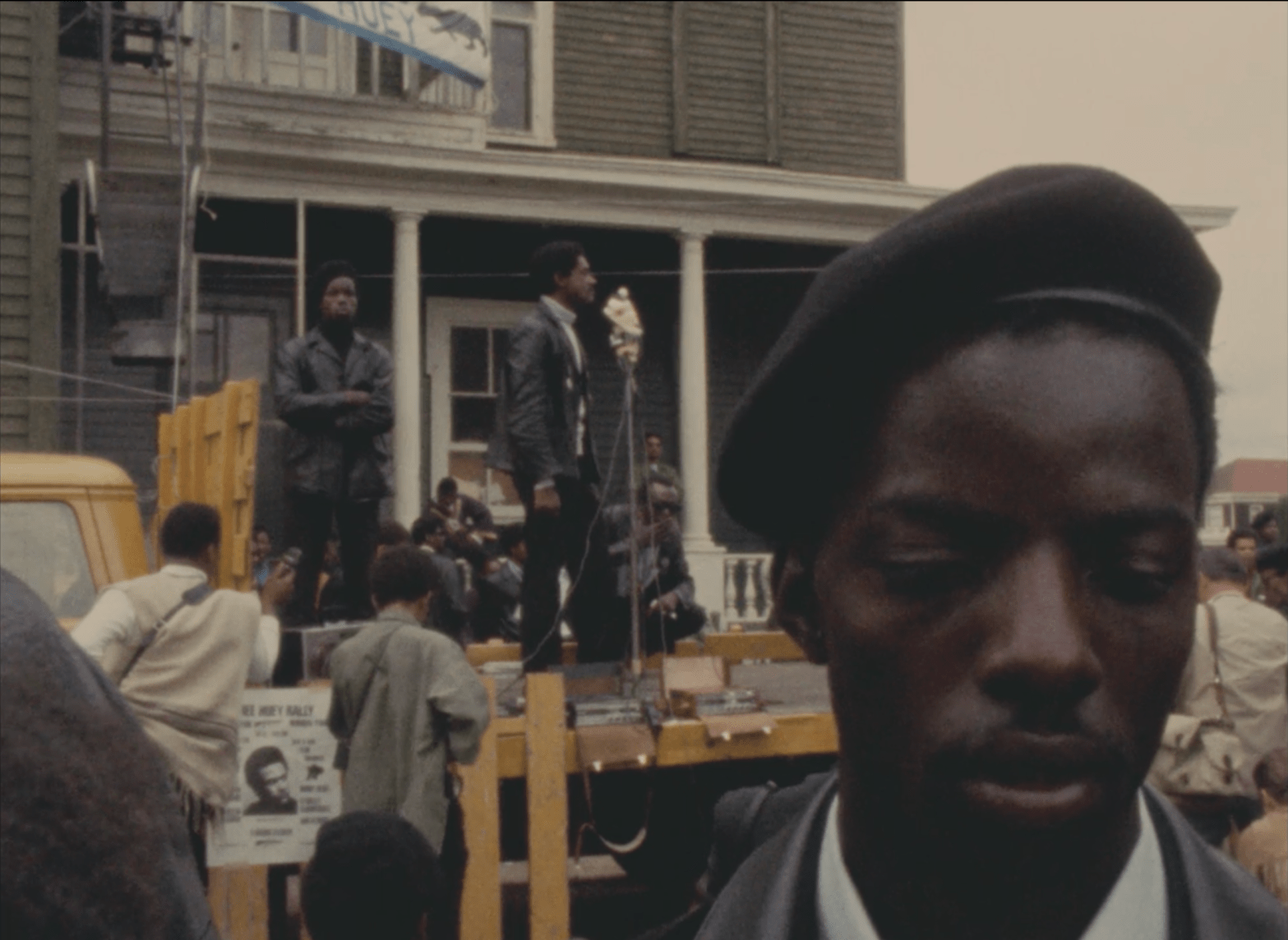
Black Panthers: A Peer into America’s Most Revolutionary Party

Agnès Varda could’ve easily sprinkled her unique French New Wavian style all over Black Panthers, but she rightfully, and humbly, takes a step back. In this half-hour peer into America’s most revolutionary party, Varda understands the stories of the oppressed and the revolutionary classes are best told themselves. She lets Party members explain their ideology, political struggle, and motivations.

Continue reading “Black Panthers: A Peer into America’s Most Revolutionary Party”